UK Buyer Guide
House survey cost UK 2026 + calculator: Level 2 and Level 3 prices
Use the estimator below to budget for a RICS Level 2 or Level 3 survey before you ask local firms for quotes. This guide uses broad 2026 budgeting ranges, not observed market averages or live surveyor prices. The price you are offered depends on survey level, property size, value, region and complexity.
MyPropertyScan editorialNot a surveyor
Last updated: .
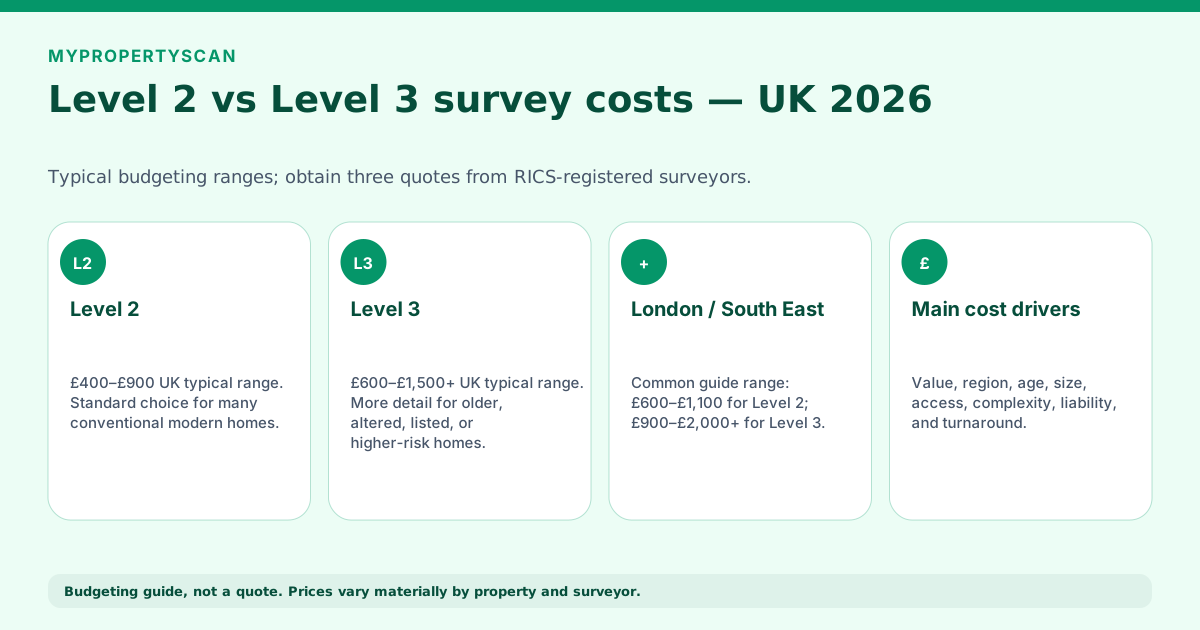
The graphic compares typical Level 2 and Level 3 survey budgeting ranges and lists region, property age, size, access and complexity as major price drivers.
Survey cost calculator
Estimate your Level 2 or Level 3 survey budget
Pick the closest property profile and use the result as a budgeting range before you ask local RICS firms for quotes. The estimator uses broad 2026 UK buyer ranges, not live surveyor pricing.
Estimated buyer budget
£550-£900
This is a buyer-budgeting range, not a fixed quote. RICS surveyors price by property size, value, access, local demand, liability and turnaround, so get three local quotes before booking.
Survey level note
Level 2 is usually proportionate for modern, conventional homes in reasonable condition.
Before booking, check:
- Confirm whether VAT and a valuation are included.
- Ask whether the surveyor has inspected similar property types locally.
- Check how many follow-up questions are included after the report.
- Leave budget for specialist reports if damp, drains, electrics, asbestos or movement are flagged.
Tool shortcut
Run a property check before you commission a survey
Free preview: flood risk, EPC rating, crime, tenure and air quality. The £9.99 report adds the remaining 17 checks, 22 in all, drawing on up to 15 public datasets.
Run a free previewAlready know which level you need?
Use this page for the full UK survey-cost comparison and the calculator above for a property-specific budget. If you are still choosing between the two survey levels rather than pricing one, the decider below walks through which is proportionate for your property.
Survey types and 2026 prices
These are MyPropertyScan's indicative 2026 buyer-budgeting ranges, not measured UK averages, a RICS price list or live surveyor quotes. London and South East estimates appear separately to help you plan. Get three comparable local quotes before booking.
| Survey type | Indicative UK budget | Indicative London / SE budget | Notes |
|---|---|---|---|
| RICS Level 1 (Condition Report) | £300–£500 | £400–£600 | Basic visual condition survey. Ask whether its scope suits your property and concerns. |
| RICS Level 2 (HomeBuyer Report) | £400–£900 | £600–£1,100 | Often considered for conventional homes in reasonable condition. Confirm whether a valuation is included. |
| RICS Level 2 (HomeBuyer survey only, no valuation) | £350–£700 | £500–£900 | Level 2 inspection without a market valuation. Check the written scope when comparing quotes. |
| RICS Level 3 (Building Survey) | £600–£1,500+ | £900–£2,000+ | The most thorough RICS report. Recommended for older, listed, or altered properties. |
| Snagging survey (new build) | £300–£600 | £400–£800 | Pre-completion check against developer spec. Different document from RICS surveys. |
| Specialist follow-up reports | £200–£900 | £300–£1,200 | Damp/timber, structural engineer, drainage CCTV, asbestos register. Commissioned after the main survey if needed. |
These editorial estimates are not calculated from a surveyor-quote sample. Sources below explain survey types and home-buying steps; they do not substantiate these price ranges. Ask each firm what its written quote includes, especially VAT, valuation, travel and follow-up work.
What drives UK survey cost
- Property value: a firm may consider value alongside size, construction, access and liability when quoting. Compare quotes for the same property and scope.
- Region: local availability and travel may affect quotes. Scotland and Northern Ireland have different home-buying and survey conventions, so do not assume the England and Wales estimates apply unchanged.
- Property age and complexity: listed buildings, period properties and homes with extensions may need more inspection time or specialist input.
- Travel time: remote rural properties pull pricing up because of the surveyor's travel cost.
- Speed of turnaround: ask whether a faster report carries an additional fee.
Level 2 vs Level 3: which to book
A Level 3 survey generally covers more than Level 2, so ask firms to quote both where the choice is unclear. Older, listed or altered properties, and homes with visible movement or damp, may warrant the broader inspection. Confirm the right level with a qualified surveyor who knows the property type.
For a deeper comparison see Level 2 vs Level 3 survey.
What to check in a quote
- Whether inspection is on-site and who will carry it out
- Survey level, written report scope and expected delivery date
- Whether VAT and an optional valuation are included
- Whether follow-up questions after the report are included
Specialist follow-ups (damp and timber, structural engineer, drainage CCTV, asbestos register) may cost extra. Ask for a separate written quote if the survey recommends one.
Mortgage valuation vs survey: not the same thing
Your lender's mortgage valuation is for the lender's benefit. It confirms the loan-to-value, not whether the property is sound. A mortgage valuation is not a substitute for a survey. Check what your lender has commissioned and whether you need a separate inspection for your own decision.
How to keep survey cost down without cutting quality
- Get three comparable quotes from RICS-registered local firms. Check scope, VAT and valuation before comparing prices.
- Skip the valuation add-on if the lender has already commissioned one.
- Use the free property preview to screen public-data signals before commissioning a survey. It cannot rule out defects or replace a surveyor's inspection.
- Don't pay for a survey on a property you're likely to walk away from. Get the data first.
Run the check
Run a property check before you commission a survey
Free preview: flood risk, EPC rating, crime, tenure and air quality. The £9.99 report adds the remaining 17 checks, 22 in all, drawing on up to 15 public datasets.
Run a free previewFrequently asked questions
Is this a fixed survey quote?
No. The calculator gives a cautious buyer-budgeting range, not a fixed quote. Surveyors price by property size, value, region, access, complexity, liability and turnaround, so get three local RICS quotes before booking.
How much does a Level 2 HomeBuyer survey cost in 2026?
Our indicative 2026 buyer-budgeting range for a Level 2 survey is £400–£900 across the UK, or £600–£1,100 in London and the South East. These are not measured averages or live quotes; request prices for your property and confirm whether VAT and valuation are included.
How much does a Level 3 Building Survey cost in 2026?
Our indicative 2026 buyer-budgeting range for a Level 3 survey is £600–£1,500+ across the UK, or £900–£2,000+ in London and the South East. These are not measured averages or live quotes; older, larger or altered properties may cost more.
Is the cheapest survey worth it?
Compare the scope, not just the price. Verify the surveyor is RICS-registered and ask whether the inspection is on-site, whether VAT or a valuation is included, and what follow-up questions the fee covers.
Can I negotiate survey costs?
You can ask whether the price or scope is negotiable. Get three comparable written quotes from RICS-registered firms, then compare VAT, valuation, inspection scope and turnaround before booking.
Keep going
Related guides
- Damp survey cost , when a damp and timber follow-up is worth paying for.
- Structural engineer survey cost , when cracks or movement need specialist evidence.
- CCTV drain survey cost , when drainage findings justify camera inspection.
- HomeBuyer survey checklist , what a Level 2 report should cover before exchange.
- Building survey checklist , what a Level 3 report should investigate.
- Level 2 vs Level 3 survey , which level to book for which property.
- What to do after a bad survey , renegotiate, pull out, or proceed.
- Survey Decoder , plain-English explanations for every common UK survey finding.
- Buying guides by property type , era-specific survey checklists.
How MyPropertyScan produces this guide, and what it is not
Published by MyPropertyScan and written by Ziad Nasr, who is accountable for its accuracy. No page here is written or reviewed by a chartered surveyor, conveyancer or regulated adviser, and we do not claim otherwise.
This page is not:
- Chartered surveying: we do not inspect properties or produce RICS Home Survey reports
- Legal advice: we do not act as conveyancers or advise on title, tenure or contracts
- Mortgage or insurance advice: we are not regulated by the FCA and give no recommendations
The sources on this page explain survey standards and buying steps. Price ranges here are editorial budgeting estimates, not measured averages or RICS price statistics. Pages are updated when source coverage, survey cost assumptions, or lender and legal requirements materially change. Dataset limitations are set out on the methodology page.
Spotted something out of date or wrong? Email [email protected] and we will correct it and change the update date.
Sources used
We use UK public and specialist sources where they are available. Public datasets can be incomplete, delayed, or missing for some addresses. Treat them as a starting point, not as a replacement for professional advice.
These references describe survey levels and the buying process. They are not sources for the indicative price ranges above, which remain editorial budget estimates until comparable surveyor-quote evidence is available.
- Professional standard: RICS Home Survey StandardRICS standard for condition-based residential surveys in the UK.
- Learn more from: RICS consumer guide to surveysConsumer-facing guide to survey types and when each level is appropriate.
- Official guidance: GOV.UK buying or selling your homeGovernment overview of the home buying and selling process.
General information only. Not legal, mortgage, insurance, or surveying advice. Always confirm with your own surveyor, broker, and conveyancer before making decisions. MyPropertyScan is operated by BiteRight Ltd.