Level 2 vs Level 3 Survey
Level 2 or Level 3 survey: which one do you need?
A Level 2 Home Survey gives an intermediate visual inspection, condition ratings and concise repair or maintenance advice; a separate Level 2 service can include valuation. A Level 3 is the most extensive RICS Home Survey, with deeper analysis of materials, defects, likely causes, repair options and consequences. Both remain subject to safe access and written terms.
Your offer is accepted, the solicitor is instructed, and the next decision is the survey. Pick the right level once and you reduce both ends of the regret curve: paying for detail you did not need, or choosing a scope that was too limited for the property and your concerns.
The short answer
A Level 2 survey suits many conventional homes in reasonable condition and costs roughly £450–£900. A Level 3 survey (RICS Building Survey) is the deeper inspection for older, altered, listed, or non-standard properties, costs about £700–£1,500, and adds deeper defect, repair and maintenance analysis. Treat age, alterations, unusual construction, visible defects and planned works as reasons to discuss Level 3 rather than as an automatic verdict.
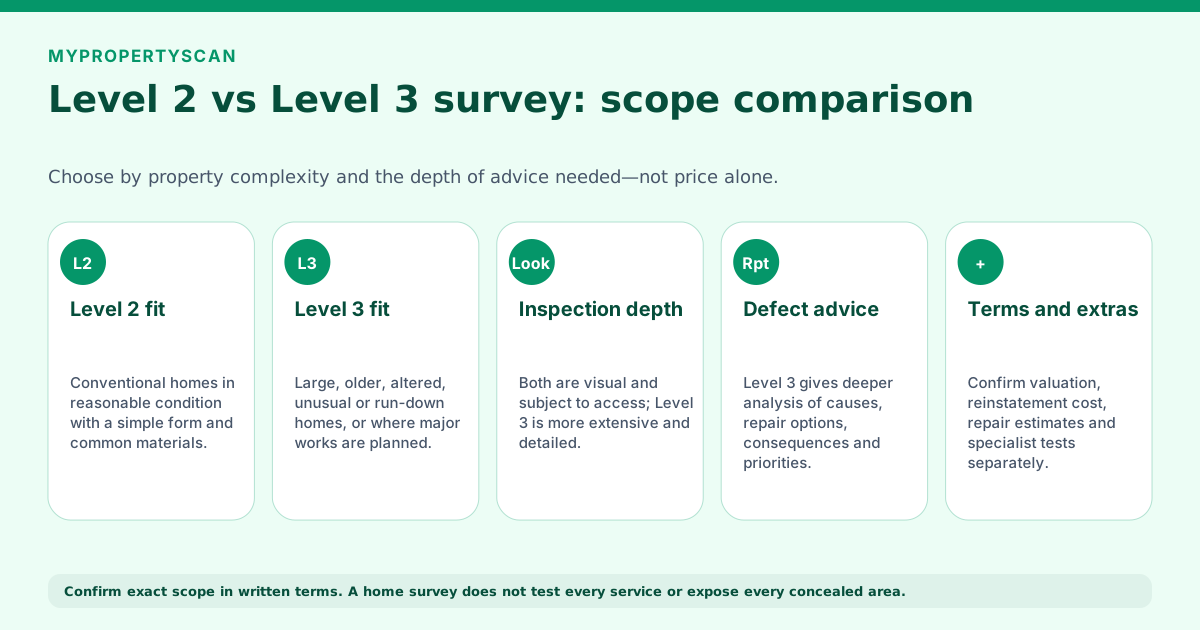
The five-part comparison covers property fit, relative inspection depth, defect and repair advice, and separate checks for valuation, reinstatement cost, repair estimates and specialist testing. It stresses that exact scope must be confirmed in written terms.
MyPropertyScan editorialNot a surveyor
Last updated: .
Use the decider below for a survey recommendation, then read the comparison and cost tables before booking. If you're still asking do I need a survey?, start with the survey-decision guide first.
Survey decider
Answer 4 questions for a survey recommendation
- 1
Is the property pre-1920?
Solid walls, lath-and-plaster, lime mortar, and timber-decay risk make older stock harder to assess.
- 2
Has it been significantly extended or altered?
Loft conversions, rear extensions, garage conversions, or removed chimney breasts add hidden structural risk.
- 3
Did a property report flag any structural or environmental concerns?
Subsidence risk, flood risk, non-standard construction, or a poor EPC are reasons to upgrade survey level.
- 4
Are you planning major works after purchase?
Loft conversions, knocking through, or basement digs need a surveyor who has examined the structure in depth.
Recommendation appears once all four questions are answered.
Tool shortcut
Run a property check before you commission a survey
Free preview: flood risk, EPC rating, crime, tenure and air quality. The £9.99 report adds the remaining 17 checks, 22 in all, drawing on up to 15 public datasets.
Run a free previewLevel 1 vs Level 2 vs Level 3 at a glance
All three are defined by the RICS Home Survey Standard — the official scheme that replaced the old “Condition Report / HomeBuyer Report / Building Survey” labels with Level 1, Level 2, and Level 3. They share a 1-3 condition rating system, but vary significantly in scope, depth, and what the surveyor is contractually obliged to investigate.
| Level 1 | Level 2 | Level 3 | |
|---|---|---|---|
| RICS description | Condition Report | HomeBuyer Report | Building Survey |
| Visual inspection | Basic visual inspection | More extensive visual inspection | Most extensive visual inspection |
| Defect ratings 1-3 | Yes | Yes | Yes, with detailed analysis |
| Market valuation | No | Separate Level 2 valuation option | Not standard; agree separately |
| Repair and maintenance advice | Brief | Yes | Yes, with prioritised guidance |
| Defect analysis | Condition flags | Concise advice | Detailed causes, consequences and remedies |
| Typical property fit | Simple, conventional, good condition | Conventional, reasonable condition | Older, altered, unusual or run-down |
| Typical 2026 fee | £300 – £450 | £450 – £900 | £700 – £1,500+ |
What is a Level 2 survey (HomeBuyer Report)?
A Level 2 is the intermediate RICS survey, best suited to many conventional properties that appear to be in reasonable condition. The surveyor inspects the visible and easily accessible parts of the building, identifies defects, rates them on the 1-3 scale, and flags items that need further investigation.
The report is structured for buyers, not surveyors: short, plain-English, with a clear summary page. A separate Level 2 service can include a market valuation; confirm whether it is included, the fee, and the assumptions in the written terms before booking.
What a Level 2 doesn't do: lift floorboards, open up timbers, test electrics or plumbing, or give detailed structural advice. If the surveyor finds something they can't fully assess, they'll recommend a specialist follow-up. At that point you either pay extra or wish you'd gone Level 3 in the first place.
What is a Level 3 survey (Building Survey)?
A Level 3 Building Survey is the most extensive RICS Home Survey. It provides a more detailed visual inspection and analysis of the building, defects, likely causes, repair options and consequences. Access, specific investigations and any cost estimates depend on the property and the service agreed in writing.
It suits buyers of older, altered, or non-standard properties who need to make an informed decision about a building with extra risk. The 1-3 condition rating is the same as Level 2, but the analysis behind each rating is much deeper. A Cat 3 in a Level 3 carries more weight in negotiation because the surveyor has examined the cause.
When is a Level 3 likely to be worth it?
Six reasons to discuss a Level 3 scope with a competent surveyor:
- Pre-1930 properties. Solid walls, lime mortar, lath-and-plaster, slate roofs, and timber-decay risk all need expert inspection.
- Significantly extended or altered. Loft conversions, rear extensions, removed chimney breasts, and underpinning all introduce structural risk.
- Visible defects on viewing. Significant cracking, sagging roof lines, damp staining, or doors out of square.
- Non-standard construction. PRC, Wimpey No-Fines, Airey, BISF, certain timber-frame, and single-skin extensions.
- Listed buildings or conservation areas. Repair restrictions and consent requirements need a surveyor familiar with both.
- Major works planned post-purchase. Loft conversions, knocking through, or basements need structural baseline data.
2026 UK survey costs by property type
Indicative 2026 fees, including VAT, based on RICS member rates across England and Wales. London and the South East price 10-20% higher; the North and Midlands 5-15% lower. For a deeper pricing breakdown, see Level 2 and Level 3 survey costs 2026.
| Property type | Level 2 | Level 3 |
|---|---|---|
| Studio / 1-bed flat | £400 – £600 | £600 – £900 |
| 2-bed terrace | £500 – £700 | £700 – £950 |
| 3-bed semi-detached | £600 – £850 | £900 – £1,200 |
| 4-bed detached | £750 – £1,000 | £1,100 – £1,500 |
| 5+ bed / large detached | £900 – £1,200 | £1,300 – £2,000 |
| Listed / period property | Not advised | £1,200 – £2,200 |
| Non-standard construction | Not advised | £1,000 – £1,800 |
Already have a survey result you don't understand? What to do after a bad survey
What does a surveyor look at?
On a Level 3, the surveyor systematically inspects the exterior, roof, interior, services, grounds, and any accessible loft and sub-floor voids. They use a moisture meter, a binocular for the roof, and sometimes a borescope for cavities. They're looking for signs of movement, water ingress, decay, defective workmanship, and fire-safety risks. They don't usually open up walls or lift fitted floors.
What they often miss: defects hidden behind furniture or boxed-in pipework, electrical faults that need an EICR to identify, drainage issues that need a CCTV survey, and asbestos in concealed locations. If your surveyor flags any of these, treat the recommendation seriously.
How to brief your surveyor using your MyPropertyScan report
A surveyor briefed before the visit gives you a sharper report. The MyPropertyScan property report bundles flood risk, subsidence susceptibility, EPC, listed status, building age, tenure, and price comparison data. Send the PDF to the surveyor as soon as you book.
- 1Highlight any flagged risk items: surface water flood, directional BGS ground indicator, listed status, or unusual age band.
- 2Share photos from the viewing of any visible defects: cracks, damp patches, chimney issues, ceiling sag.
- 3Ask the surveyor to comment specifically on each flagged item, even if briefly.
- 4Request a same-day verbal callback with the headline findings, before the written report arrives.
How to use survey findings in price negotiation
A survey is only useful in negotiation if you turn its language into numbers. Take each Cat 3 item, get one or two written quotes from local trades, total them, add a 10-20% buffer for unknowns, and present that as a reduction request through your solicitor. Cat 2 items split 50/50 with the seller is a fair starting position.
Most sellers move on price between 2% and 8% after a bad survey; a few don't move at all. If yours doesn't and the numbers don't work, walk. The full negotiation playbook is in the bad house survey guide.
If your report contains wording you don't understand, look it up in the Survey Decoder before commissioning specialist quotes. Plain-English explanations of the most common findings — from evidence of movement to spray foam insulation — help you assess whether a Cat 3 item warrants a structural engineer, a damp specialist, or just a builder's quote.
Before you book the surveyor
Run a free MyPropertyScan preview first. The full report tells you exactly which level to commission and what to instruct the surveyor to look at: address-specific risk data, building age, and construction signals all feed into the recommendation.
Run the check
Run a property check before you commission a survey
Free preview: flood risk, EPC rating, crime, tenure and air quality. The £9.99 report adds the remaining 17 checks, 22 in all, drawing on up to 15 public datasets.
Run a free previewFrequently asked questions
Is a Level 3 survey worth it?
A Level 3 is often proportionate for older, significantly altered, unusual, run-down or visibly higher-risk property, and when major works are planned. A modern conventional home in reasonable condition may suit Level 2. Ask the surveyor to confirm the written scope against the property and your concerns.
What is included in a Level 2 survey?
A RICS Level 2 Home Survey provides an intermediate visual inspection of the building, services and grounds, subject to safe access and the agreed terms. It reports condition, defects and repair or maintenance advice. A valuation and reinstatement figure are available only in the Level 2 survey-and-valuation service.
How much does a Level 3 survey cost?
A Level 3 Building Survey in 2026 typically costs £700-£1,500 depending on property size, age, and region. Small terraces sit around £700-£950, semi-detached and three-bedroom houses around £900-£1,200, and large detached or listed properties £1,200-£2,000+. Add £150-£300 if you want a market valuation included, which Level 3 doesn't provide as standard.
Can I switch from Level 2 to Level 3?
Yes, before the surveyor attends the property. If you've already booked, contact the firm and ask to upgrade. Most will adjust the fee to the difference rather than charging the full Level 3. After the survey is done, the only option is to commission a fresh Level 3, which means paying for the full fee again.
Do I need a Level 3 survey for a Victorian house?
A Victorian house is often a strong Level 3 candidate because age, alterations, traditional materials and repair history can make the building more complex. It is not automatic: discuss condition, access, planned works and your concerns with a competent surveyor, then confirm the agreed scope in writing.
How long does a Level 3 survey take?
On site, a Level 3 typically takes 3-5 hours depending on size and complexity. The written report follows within 5-10 working days. Build in a buffer between report receipt and exchange, usually a week, so you have time to commission specialist follow-ups (structural engineer, damp specialist, EICR) and renegotiate before committing.
Keep going
Related guides
- Level 2 and Level 3 survey costs , current pricing for both survey types by property value.
- HomeBuyer survey checklist , what Level 2 should cover in the report.
- Building survey checklist , what Level 3 should investigate before exchange.
- House buying checklist , the full pre-offer checklist of every property check to run before you commit.
- Bad house survey: what to do next , renegotiate, pull out, or proceed, with a cost-estimation table.
- Survey Decoder , plain-English explanations of what each survey finding means, how serious it is, and what it costs to fix.
How MyPropertyScan produces this guide, and what it is not
Published by MyPropertyScan and written by Ziad Nasr, who is accountable for its accuracy. No page here is written or reviewed by a chartered surveyor, conveyancer or regulated adviser, and we do not claim otherwise.
This page is not:
- Chartered surveying: we do not inspect properties or produce RICS Home Survey reports
- Legal advice: we do not act as conveyancers or advise on title, tenure or contracts
- Mortgage or insurance advice: we are not regulated by the FCA and give no recommendations
Figures and process steps come from the published UK datasets and standards listed on this page, not from professional practice. Pages are updated when source coverage, survey cost assumptions, or lender and legal requirements materially change. Dataset limitations are set out on the methodology page.
Spotted something out of date or wrong? Email [email protected] and we will correct it and change the update date.
Sources used
We use UK public and specialist sources where they are available. Public datasets can be incomplete, delayed, or missing for some addresses. Treat them as a starting point, not as a replacement for professional advice.
Source standard: preference goes to official government datasets, statutory bodies, professional standards, and primary dataset publishers. We cite the source family on the page and explain coverage limits rather than filling gaps with unsupported estimates.
- Professional standard: RICS Home Survey StandardRICS standard for condition-based residential surveys in the UK.
- Learn more from: RICS consumer guide to surveysConsumer-facing guide to survey types and when each level is appropriate.
- Official guidance: GOV.UK buying or selling your homeGovernment overview of the home buying and selling process.