Leasehold Check
Freehold or Leasehold Checker
Around 4.8 million homes in England are leasehold, and most buyers don't check until late in the process. Leases below 80 years can trigger sharp extension costs, and high or escalating ground rent can restrict mortgage choice. Enter a postcode below and we'll show what historical HM Land Registry sale records show in seconds, alongside the rest of your buyer due-diligence pack.
MyPropertyScan editorialNot a surveyor
Last updated: .
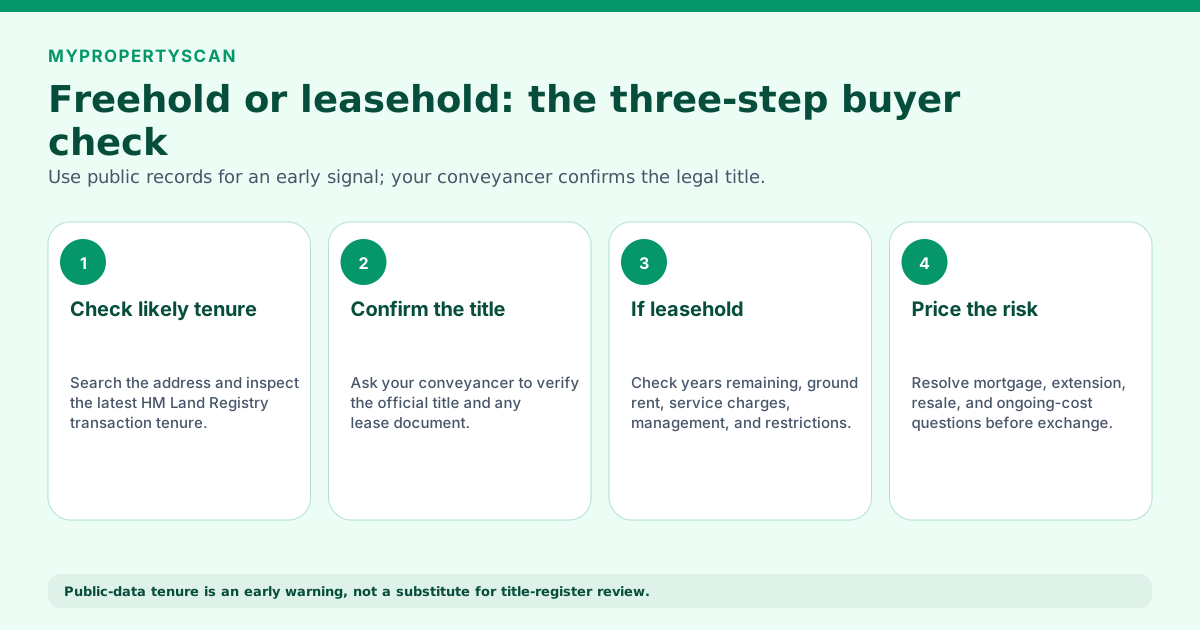
The decision tree moves from an early public-data tenure check to official-title confirmation, lease-term review and a final mortgage, resale and ongoing-cost decision.
How to check if a property is freehold or leasehold
The quickest buyer check is to search the postcode, choose the matching address, look for the latest historical HM Land Registry transaction tenure, then ask your conveyancer to confirm the official title register, lease length, ground rent and service-charge position before exchange. MyPropertyScan gives you the early warning; your solicitor confirms the legal detail.
Historical tenure signal
Check the public sale record for a postcode
Public Price Paid Data currently covers England and Wales. Enter a full postcode to choose an address and see the latest recorded transaction tenure and sale date.
A historical transaction is an early signal. Only the official title register and a conveyancer can confirm current tenure, lease term, extensions, ground rent and service charges.
Verify with HM Land RegistryTool shortcut
Start your property check now
Enter an address below, we'll take you straight to the free property preview.
The three-step buyer check
- 1. Check likely tenure early. Use the freehold or leasehold checker before you spend money on surveys, mortgage fees or legal searches.
- 2. Confirm the title register. If the property looks leasehold or unconfirmed, ask for the title number, lease term, ground rent and service-charge pack.
- 3. Price the risk before exchange. Short leases, rising ground rents, unusual service charges and estate management fees can change your mortgage, resale and negotiation position.
How long is my leasehold? How to find out how many years are left on a lease
For registered property in England or Wales, search the official HM Land Registry service by address. The free property summary confirms whether the title is leasehold. Download the title register if you need the term: its A register normally states the lease date, parties and original length. An online register currently costs £7.
- 1. Read the exact term wording. It may say, for example, “125 years from 1 January 2005”. Use the start date in that wording, which is not always the date the current owner bought the flat.
- 2. Calculate the contractual end date. Add the original term to its stated start date, then compare that end date with today. Treat your arithmetic as an initial check, not the legal answer.
- 3. Ask your conveyancer to confirm it. They should check the full lease and any deed of variation, surrender and regrant or completed extension that could change the registered term, ground rent or rights.
HM Land Registry covers England and Wales. Use Registers of Scotland or Land and Property Services in Northern Ireland for property in those jurisdictions.
What does leasehold mean for buyers?
Freehold means you own the building and the land outright with no time limit. Leasehold means you own the property for a fixed number of years; once the lease runs out, ownership reverts to the freeholder unless you extend. Most flats are leasehold, and so are some new-build estate houses.
Mortgage policies vary, but many lenders set minimum unexpired terms at application and at the end of the mortgage. A 25-year mortgage on a 90-year lease leaves 65 years at expiry, so the property may fall outside some lender policies. Resale also gets harder as the lease shortens.
The 80-year rule
Below 80 years remaining, the freeholder becomes entitled to 50% of the "marriage value" (the uplift in value created by extending). Government guidance says the extension cost increases significantly at 80 years or fewer. Reforms intended to remove marriage value are not yet fully in force, so buyers should price the law that applies when they transact.
If you discover a sub-80 year lease before exchange, your options are: ask the seller to start the statutory extension before completion, negotiate a price reduction to cover the future extension, or walk away. A RICS leasehold specialist can quote the extension within a few days.
What our report checks
- Tenure (freehold or leasehold) from HM Land Registry Price Paid Data
- Date of the most recent registered transaction
- Likely leasehold inference for flats and maisonettes where transaction tenure is unavailable
- Flat-with-freehold contradiction flag (often share of freehold, worth confirming)
- A direct "what to ask your solicitor" section based on the tenure result
Run the check
Check a UK address before you offer, in 15 seconds
Free preview: flood risk, EPC rating, crime, tenure and air quality. The £9.99 report adds the remaining 17 checks, 22 in all, drawing on up to 15 public datasets. Subsidence, from BGS engineering geology, is in the full report.
Run a free previewCommon leasehold warning signs
| Warning sign | What it means | What to do |
|---|---|---|
| Lease under 80 years | Extension costs jump sharply | Get a RICS valuation before offering |
| High or escalating ground rent | Can restrict mortgage choice and resale | Check the lender policy and ask your solicitor to review the clause |
| Doubling ground rent clause | Could make the property unmortgageable | Walk away or negotiate heavily |
| Service charge not disclosed | May be very high | Request three years of accounts |
| Fleecehold management fees | Freehold but with private estate charges | Ask about deed of covenant |
Frequently asked questions
How do I check if a property is freehold or leasehold?
Start with the free lookup above: it queries HM Land Registry Price Paid Data for historical sale tenure and date, then lets you choose the matching public address record. The full buyer report may add an EPC property-type signal, but neither is the current title. Your solicitor should confirm the exact lease term from the title before exchange.
Is my house freehold or leasehold?
Search the address with the free lookup above for an early signal from historical HM Land Registry transaction records, then ask your conveyancer to confirm the registered title before you rely on the answer. Most houses are freehold and most flats are leasehold, but there are exceptions on both sides, including leasehold houses on some new-build estates and flats sold with a share of freehold.
What's the difference between freehold and leasehold?
Freehold means you own the building and the land outright with no time limit. Leasehold means you own the property for a fixed number of years; once the lease runs out, ownership reverts to the freeholder unless you extend. Most flats are leasehold, and so are some new-build estate houses.
Is leasehold bad when buying a house?
Not always. Many perfectly good homes are leasehold. Watch for leases under 80 years (extension costs jump), ground rents that can escalate, and high service charges on flats.
How many years should a lease have left?
Most mortgage lenders require at least 70 to 85 years remaining at the end of the mortgage term. Buyers generally want more than 90 years to feel comfortable. Leases below 80 years should be investigated carefully.
How long is my leasehold? How do I find out how long my leasehold is?
For a registered property in England or Wales, download the HM Land Registry title register. The A register normally gives the lease date and original term. Calculate the contractual end date from that wording, then ask your conveyancer to confirm the unexpired term and check for any later deed of variation or lease extension before exchange.
Can I extend a leasehold?
Yes. Under UK law you have a statutory right to extend the lease by 90 years on a flat or 50 years on a house if you qualify. Since January 2025 you no longer need to have owned the property for two years first.
What is the 80-year rule?
Once a lease drops below 80 years, the freeholder is entitled to 50% of the marriage value increase when you extend. That makes extending significantly more expensive, which is why buyers and mortgage lenders pay close attention to the 80-year mark.
Have a survey already?
Decode what your surveyor flagged
Spray foam, evidence of movement, damp, knotweed and more, explained in plain English with severity, typical costs, and what to ask before you commit.
Open Survey Decoder, free- Leasehold buying guide explains lease length, ground rent and service charge checks.
- House buying checklist puts tenure checks alongside flood, EPC and survey questions.
- Sample property report shows how tenure appears in a full buyer report.
How MyPropertyScan produces this guide, and what it is not
Published by MyPropertyScan and written by Ziad Nasr, who is accountable for its accuracy. No page here is written or reviewed by a chartered surveyor, conveyancer or regulated adviser, and we do not claim otherwise.
This page is not:
- Chartered surveying: we do not inspect properties or produce RICS Home Survey reports
- Legal advice: we do not act as conveyancers or advise on title, tenure or contracts
- Mortgage or insurance advice: we are not regulated by the FCA and give no recommendations
Figures and process steps come from the published UK datasets and standards listed on this page, not from professional practice. Pages are updated when source coverage, survey cost assumptions, or lender and legal requirements materially change. Dataset limitations are set out on the methodology page.
Spotted something out of date or wrong? Email [email protected] and we will correct it and change the update date.
Sources used
We use UK public and specialist sources where they are available. Public datasets can be incomplete, delayed, or missing for some addresses. Treat them as a starting point, not as a replacement for professional advice.
Source standard: preference goes to official government datasets, statutory bodies, professional standards, and primary dataset publishers. We cite the source family on the page and explain coverage limits rather than filling gaps with unsupported estimates.
- Early tenure signal: HM Land Registry Price Paid DataRegistered residential sale records for England and Wales, including transaction tenure where supplied.
- Official property lookup: HM Land Registry search for land and property informationFree tenure summary and paid title-register access for registered property in England and Wales.
- How to verify lease length: HM Land Registry guide to reading a title registerExplains where a leasehold title records the lease date, parties and original term.
- Current reform status: GOV.UK leasehold toolkit for EnglandCurrent government summary of live leasehold rights and reforms that still await implementation.